
Paw pads are designed to take a beating, but they have limits. Crack a pad open and you’ve got an open wound on the part of the dog that touches the ground constantly — uncomfortable for the dog, slow to heal, and prone to infection if ignored. Most of the time it’s preventable with a few small habit changes.
This guide covers what actually causes pad cracking, how to treat it at home, when to escalate to a vet, and how to keep it from recurring.
The most common causes of cracked pads are road salt in winter, hot pavement in summer, prolonged contact with cleaning chemicals, and underlying skin conditions. Most minor cracks heal in 7–10 days with at-home care. Use paw wax preventively from late November through March and from June through August.
What’s actually happening to the pad
A paw pad is mostly thick, tough skin with a layer of fatty padding underneath. The outer layer is heavily keratinized — meaning it’s reinforced with the same protein that’s in your fingernails — which is why it’s tough enough to walk on. But keratin needs moisture to stay flexible. When the pad gets too dry, the keratin becomes brittle, and the surface cracks under the stress of every step.
Cracking isn’t always a single event. More often it’s a gradual process: the pads get dry, small surface cracks form, those cracks deepen with continued walking, and eventually you notice your dog limping.
The four main causes
Road salt and de-icers
The leading cause of winter pad damage in the Northeast. Rock salt and the various proprietary “pet safe” de-icers all draw moisture out of the pads on contact. Dogs walking salted sidewalks for even 10-15 minutes can come home with measurably drier pads. Over a winter, this accumulates into cracking.
The dog licking the salt off makes it worse — it spreads salt onto already-irritated pad surfaces and can cause GI upset if enough is ingested.
Hot pavement
The summer counterpart. Asphalt in direct sun reaches 130-140°F when air temperatures are in the upper 80s. That’s hot enough to dehydrate pad tissue and, at the upper end, cause actual burns. Walks on hot pavement don’t always cause cracking immediately — they damage the pad surface, and the cracks appear later.
The seven-second rule: press the back of your hand to the pavement for seven seconds. If you can’t keep it there, your dog shouldn’t walk on it.
Chemical contact
Floor cleaners, lawn treatments, and pool chemicals all interact with paw pads. Dogs walking across recently mopped floors pick up residue. Dogs running through a freshly treated lawn pick up fertilizer and herbicide. None of these cause cracking in one exposure, but repeated low-level contact can dry pads out badly.
Underlying skin conditions
Autoimmune conditions, vitamin deficiencies, and certain breed-specific genetic conditions (hyperkeratosis is common in Labradoodles, some Bulldogs, Irish Terriers) cause the pads to overproduce keratin, leading to thick, dry, crack-prone pads even without environmental triggers.
How to recognize the cracking before it gets bad
Check your dog’s pads weekly during winter and summer. Things to look for:
- Pads look unusually dry or “chalky” instead of slightly moist and supple
- Small visible cracks on the pad surface, especially near the edges
- Your dog licking their paws more than usual
- Slight limping or favoring one paw
- Redness around the edge of the pad
- Pads that feel rough rather than smooth
Catch it at this stage and a few days of paw wax usually fully reverses it. Wait until your dog is visibly limping and you’re looking at 1-2 weeks of treatment and reduced walks.
At-home treatment for minor cracks
Rinse the affected paw with lukewarm water. If there’s any debris in the crack, gently irrigate with saline. Don’t pick at the crack or try to peel anything off.
Pat dry with a clean towel. Air-dry for a few minutes. Moisture trapped in a crack feeds bacteria.
A thin layer of shea butter / beeswax-based paw wax forms a protective barrier and supplies moisture to the pad tissue. Apply 2x daily for the first 3-4 days.
Short walks only for the first 5-7 days. Avoid salted, sandy, or hot pavement. Carpeted indoor walking is fine. The pad needs time without further stress to heal.
The dog will want to lick the paw. Constant licking keeps the area wet and slows healing. A cone is the reliable solution for serious cases; for mild ones, simple supervision and redirection works.
Deep cracks bleeding or with visible discharge. Redness or swelling spreading beyond the pad. Bad smell. Your dog won’t put weight on the foot. Fever. Cracks that aren’t healing after 7 days of proper home care. Any of these mean an infection has set in and you need real medical treatment.
Prevention
Far easier than treatment. The same paw wax that treats minor cracks also prevents them when used consistently.
Winter routine (late November through March)
- Apply paw wax before every walk. 5 seconds of work, takes a thin layer.
- Wipe paws with a damp cloth immediately after every walk to remove salt.
- Check pads weekly under good light for early dryness or cracking.
- Walk on snow when possible — it’s gentler than salted pavement.
Summer routine (June through August)
- The seven-second pavement test before any midday walk.
- Shift walks to early morning and after sundown when possible.
- Apply paw wax before walks on hot days even if you’re keeping it short.
- Walk on grass and dirt when available — both are much cooler than asphalt.
Year-round
- Avoid letting your dog walk through freshly mopped or chemically-treated areas.
- Apply paw wax 1-2x weekly even outside the heat/salt seasons to keep pads supple.
- Keep the fur between toes trimmed — it traps moisture and irritants.
Some dogs lick the wax off immediately, which defeats the purpose. The fix: apply it about 5 minutes before the walk so it has time to absorb into the pad surface. Some owners distract with a treat or toy during that 5 minutes. Booties are an alternative but most dogs need significant acclimation before they tolerate them.
What about hyperkeratosis?
If your dog’s pads look thickened, scaly, and crusty even outside the high-risk seasons, they may have idiopathic hyperkeratosis — the pads producing too much keratin. It’s a known issue in some breeds and lines.
Hyperkeratosis isn’t dangerous on its own but the affected pads crack much more easily and don’t heal as well. Treatment is ongoing application of a moisturizing paw wax (1-2x daily) plus occasional gentle filing of the worst keratin buildup. A vet can confirm the diagnosis and rule out other causes.
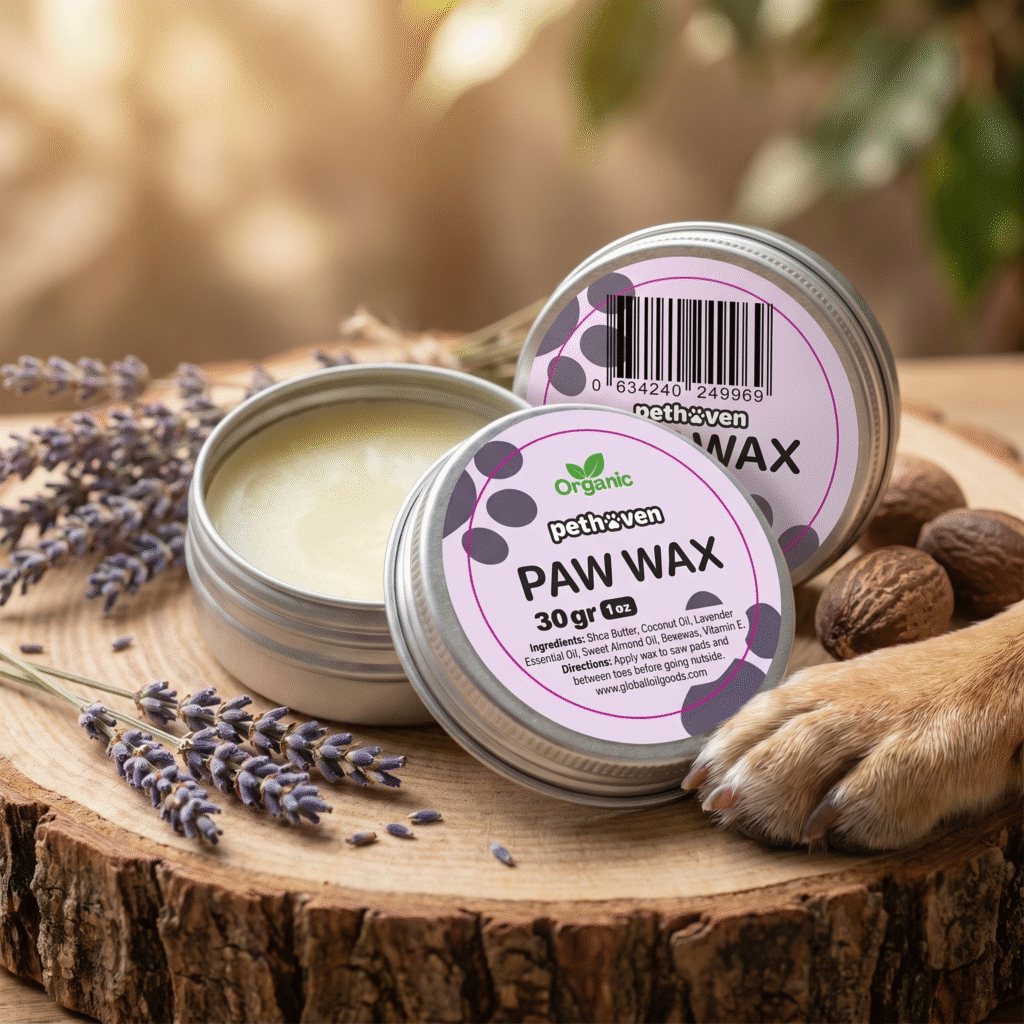 Paw Wax" title="Cracked Paw Pads: Causes, Treatment, and How to Prevent Them">
Common questions
Is paw wax safe if my dog licks it?
A good paw wax is made of food-grade ingredients (shea butter, beeswax, plant oils) and is safe in small amounts if licked. It defeats the protective purpose if licked off immediately, but it’s not dangerous.
How often should I apply paw wax preventively?
Daily before walks during winter salt season and summer hot pavement season. 1–2x weekly the rest of the year for maintenance. More often for dogs with chronically dry pads.
Can I use Vaseline instead?
Petroleum jelly is a barrier but it doesn’t actually moisturize the pad — it just blocks moisture from escaping. It also picks up dirt and grit, which then grinds against the crack. A proper paw wax does what Vaseline does plus actually supplies the pad with nutrients.
What about booties?
Booties are the most reliable protection but most dogs need significant acclimation. For winter salt the effort is worth it for some dogs. Paw wax is the lower-friction starting point.