
Most first-time dog owners get puppy bathing wrong in the same three ways: they start too early, use the wrong shampoo, and make the experience stressful enough that the dog spends the rest of their life dreading bath time. None of those mistakes are catastrophic individually, but together they create a dog that hates being bathed.
This guide walks through how to do it right the first time, with as little drama as possible.
Wait until your puppy is at least 8 weeks old. Use a mild, plant-based, puppy-safe shampoo (never human shampoo). Keep the water lukewarm and the bath short. Reward calm behavior generously. The goal of the first few baths isn’t a perfectly clean puppy — it’s a puppy that’s not afraid of being bathed.
When to start
The most common first-bath question is “how soon.” The short answer: not before 8 weeks of age, and there’s no rush even then. Puppies under 8 weeks have an underdeveloped temperature-regulation system and can become dangerously chilled during a bath. Their skin barrier is also still developing, so even mild shampoos can cause irritation.
If your puppy comes home dirty and you need to clean them before 8 weeks, use a damp washcloth on the specific dirty area. Don’t run a full bath. For very young puppies (4-6 weeks, like in a foster or rescue situation), even a partial wipe-down should be done in a warm room with the puppy fully dried immediately.
From 8 weeks onward, a full bath is fine — but most puppies don’t need their first bath until something specific calls for it (rolled in something, soiled themselves on a long car ride, came home from the breeder dirty). There’s no benefit to bathing a clean puppy “for practice.”
What you actually need
The pet-supply aisle will sell you a dozen things you don’t need. Here’s the honest list:
- Mild puppy-safe shampoo
- 2 large absorbent towels
- A non-slip mat in the tub or sink
- Treats (a lot, broken small)
- Cotton balls (optional but helpful)
- Warm room (70°F+) for after
- Special puppy bathtubs
- Conditioner (puppy coats don’t need it)
- Detangling spray
- Dog-specific blow dryer (yet)
- Anti-tear “no rinse” shampoo
- Multiple “puppy” products
The kitchen sink works fine for small puppies. For larger breeds, the bathtub is fine; just put a folded towel or rubber mat down so the puppy isn’t slipping the whole time.
Even gentle ones. Human skin pH is around 5.5; dog skin pH is closer to 7.0–7.5. Human shampoo is too acidic for dog skin and will strip the skin barrier. This matters even more for puppies because their skin is thinner than an adult dog’s. Baby shampoo is no exception.
Step-by-step: the first bath
Towels laid out, shampoo open and within reach, mat in place, treats positioned where you can reach them without letting go of the puppy. You don’t want to be one-handed-juggling on first bath day.
Most puppies don’t need much brushing, but if you have a doodle or long-coated breed, give a quick brush before the bath. Easier dry than wet.
Test on the inside of your wrist — it should feel warm but not hot. About 90-95°F. Get the temperature right before the puppy is in the room so they don’t experience a temperature surprise.
Don’t immediately start pouring water. Let them stand on the surface, smell it, look around. Give a treat for calm behavior. The goal of this step is “this is just a place I’m standing for now.”
Use a cup or your hand to pour water on the puppy’s back. Slowly. Talk to them in a calm voice. Move from the back forward to the legs and chest. Save the head for last.
Way less than you think — about a quarter-sized blob for a small puppy. Massage into the coat starting from the back and working forward. Stay below the neckline; clean the face with a damp cloth instead.
Shampoo residue is itchy and can cause skin reactions in puppies. Rinse until the water runs completely clear, then keep rinsing for another minute. Especially check armpits, belly, and the area around the tail.
Don’t let the wet puppy out of the tub. Wrap the towel around them while they’re still in the tub, lift them out, then squeeze water out gently. Don’t rub aggressively.
Keep the puppy in a warm room until their coat is dry. Puppies can get chilled fast. If they tolerate it, a cool-setting hair dryer at a distance speeds this up, but most puppies need a few baths before they’re OK with the noise.
End every bath with something the puppy loves. Special treats, favorite toy, the works. This is the most important step for making future baths easy.
Common mistakes that haunt later
Making the experience too long
A puppy bath should be 5-7 minutes from “puppy in the tub” to “puppy in the towel.” If you’re spending 15 minutes the first time, the puppy is going to associate baths with a long stressful experience. Get them in, wash them, get them out.
Letting them cry it out
If the puppy is whining, it’s communicating real distress, and ignoring it teaches them that you’re not their advocate. Stop, hold them calmly, give a treat, and continue when they’re calmer. Yes, this makes baths take longer the first few times. Yes, it pays off for the next 15 years.
Bathing too often “to get them used to it”
Bathing a puppy more often doesn’t accelerate the comfort curve — it just dries out their skin. Three or four baths over the first month of ownership is plenty. If you want them more comfortable with handling, do dry brushing, paw touching, ear inspection — all the things that come up in vet visits — instead.
The first bath isn’t really about cleaning the puppy. It’s about establishing what bath time means in your dog’s nervous system for the next decade and a half.
What about face and ear washing?
Don’t pour water directly on a puppy’s face or in their ears. Both can cause real distress. For the face, use a damp washcloth and clean gently around the eyes, muzzle, and chin. For ears, wipe just the outside flap with a damp cloth — don’t push anything into the ear canal.
Cotton balls in the ear during the bath can help if your puppy has floppy ears that fall forward — they keep splashed water out of the canal. Remove them right after the bath; never push them deep in.
When to schedule baths
Schedule the bath when:
- The puppy isn’t hungry (so they’re calm but treats still work)
- The puppy has just been outside / used the bathroom
- You have at least 30 minutes uninterrupted
- The room you’ll dry them in is warm
Don’t schedule a bath when you’re rushed, when the puppy is overtired, or right before something stressful like a vet visit.
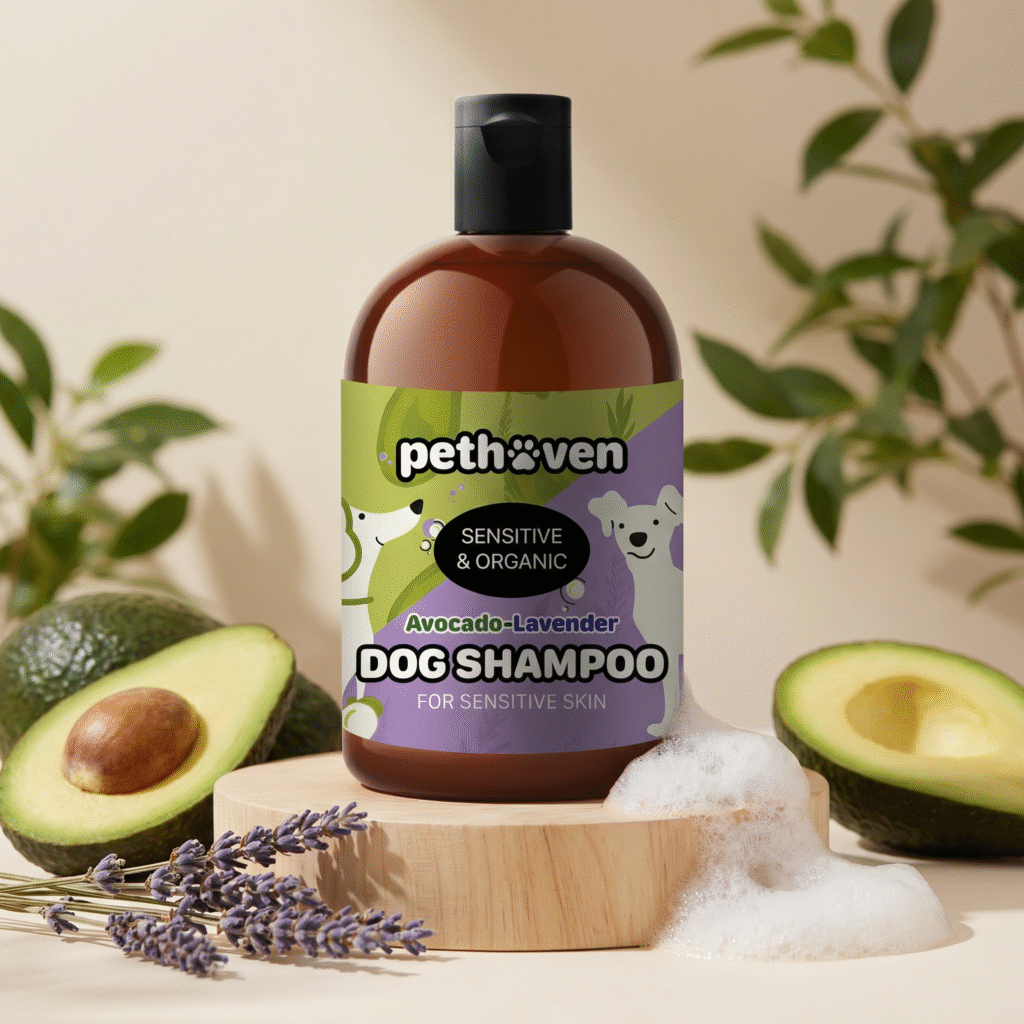 Avocado-Lavender Shampoo" title="How to Bathe a Puppy: A Step-by-Step Guide for First-Time Dog Owners">
Common questions
Can I bathe my puppy at 6 weeks if they’re really dirty?
Use a damp washcloth on the specific dirty area instead of a full bath. Their temperature regulation isn’t developed enough for a full water bath that young. Keep the room warm and dry them completely.
What if my puppy panics in the tub?
Stop. Take them out, dry them off, try again the next day. Don’t push through panic — it teaches the puppy that bath time is something to fear. Build up with very short positive sessions first: just standing in the dry tub with treats, then with water added in small steps.
How often should I bathe a young puppy?
Every 4–6 weeks max, and only if needed. Their skin barrier is still developing and over-bathing causes real issues. Between baths, wipe paws after walks and spot-clean any specific dirt.
My puppy has fleas — can shampoo handle that?
No. Flea shampoos kill adult fleas during the wash but do nothing for eggs, larvae, or the environment. See your vet for a real flea treatment (oral or topical) and treat the home. Don’t use over-the-counter flea shampoos on puppies under 12 weeks without vet input — many ingredients are too harsh.