
A healthy dog coat reflects light. Run your hand against the grain on a healthy coat and the hairs should spring back with visible movement. A dull coat doesn’t do this — it absorbs light instead of reflecting it, lies flat without bounce, and often feels rough to the touch.
The good news: dull coat is one of the most fixable skin and coat issues. Most of the time you’ll see real improvement within 30 days. The trick is figuring out which of the five common causes you’re dealing with.
The five causes of dull coat: wrong shampoo (most common), over-bathing, dietary fat deficiency, lack of brushing, and underlying health issues. A 30-day plan addressing the first four will fix 80% of dull coats. If yours doesn’t improve, see a vet — it may be the fifth.
What “dull” actually means at the cellular level
Coat shine comes from two things: the smooth surface of the individual hair shafts, and the thin film of natural oil (sebum) that coats them. Shiny hair reflects light directly off this smooth, oiled surface. Dull hair has either a damaged surface (lifted cuticles that scatter light) or insufficient oil (no reflective coating).
Almost every cause of dull coat comes back to one of these two mechanisms. Once you understand that, the fixes become obvious.
Cause 1: Wrong shampoo
The most common cause, especially for dogs whose coats used to be shiny and aren’t anymore. Aggressive shampoos with sulfates strip the natural oil layer with every wash. Used long-term, they don’t just remove existing oil — they damage the sebaceous glands’ ability to replenish it normally.
How to recognize this cause: the coat looks dull at the 1-2 week mark after a bath rather than slowly drying out over many weeks. The coat may feel brittle or rough. The dog may also show some mild itching.
The fix: switch to a plant-based shampoo without sulfates, dyes, or artificial fragrance. Stretch the gap between baths to at least 3 weeks. Expect to see improvement within 2-3 wash cycles.
Cause 2: Over-bathing
Even the gentlest shampoo, used too often, will dull the coat. Some owners bathe weekly because they read it was OK with mild formulas, then wonder why the coat doesn’t look right.
How to recognize this cause: the coat improves visibly in the second and third week after a bath, then declines after the next bath. The dog isn’t itching much, the skin looks normal, but the coat just isn’t bouncing back the way it should.
The fix: stretch the bath schedule. For most dogs, every 3-4 weeks is the sweet spot. Increase brushing to compensate — for a clean and shiny coat, brushing matters more than washing.
Cause 3: Diet
Coat shine depends on dietary fat — specifically omega-3 and omega-6 fatty acids. Many commercial dog foods are formulated to meet minimum nutritional requirements, which is enough for a healthy dog to survive on but not enough for an optimally shiny coat.
How to recognize this cause: the coat has been dull for a long time, not just recently. The dog may also have flaky skin. Switching shampoos doesn’t help. The coat overall looks “thinner” than it should.
The fix: add omega-3 supplementation. The simplest and most effective is fish oil — about 100mg of EPA+DHA per 10 pounds of body weight daily, given with food. Cheaper alternatives like flaxseed oil work but less well (dogs convert plant-based omega-3 to bioavailable forms inefficiently).
More omega-3 isn’t better past a certain point — too much causes diarrhea and can disrupt blood clotting at very high doses. Start at the suggested dose and increase only if no improvement after 4 weeks. Check with your vet for dogs on medications.
Cause 4: Lack of brushing
Brushing does three things that contribute to shine: it distributes the natural oils from skin to coat tips, it removes loose dead hair and dander, and it stimulates the sebaceous glands to produce more sebum. Skip brushing and the oil never gets distributed evenly — the skin is oily but the coat ends remain dry.
How to recognize this cause: the coat looks better near the body and worse at the tips. There’s visible dander when you part the fur. The coat may look denser than it should because dead hairs haven’t been removed.
The fix: brush regularly with a bristle brush or slicker brush appropriate for your dog’s coat type. For most coats, 5 minutes twice a week is enough. For double-coated and long-coated breeds, more frequent brushing pays off more.
Cause 5: Underlying health issues
If the above four don’t apply or your 30-day plan doesn’t work, there may be a medical cause:
The 30-day plan
Address the four common causes simultaneously. By day 30 you’ll know whether your dog has the easy version or needs a vet.
If you bathed your dog recently, don’t bathe again until day 7. Use a plant-based moisturizing shampoo (hemp seed oil-based works particularly well for dull coats). Bathe correctly: lukewarm water, gentle massage, thorough rinse, gentle drying.
Start daily fish oil supplementation. Give with food to avoid GI upset. Be consistent — the effect is cumulative over weeks.
Five minutes with a brush appropriate for your dog’s coat. Brush against the grain first to remove loose hair, then with the grain to lay it flat.
Same protocol. The coat should already be showing some improvement.
The coat should now have visible shine, lay normally, and feel softer to the touch. If it doesn’t, see a vet to investigate underlying causes.
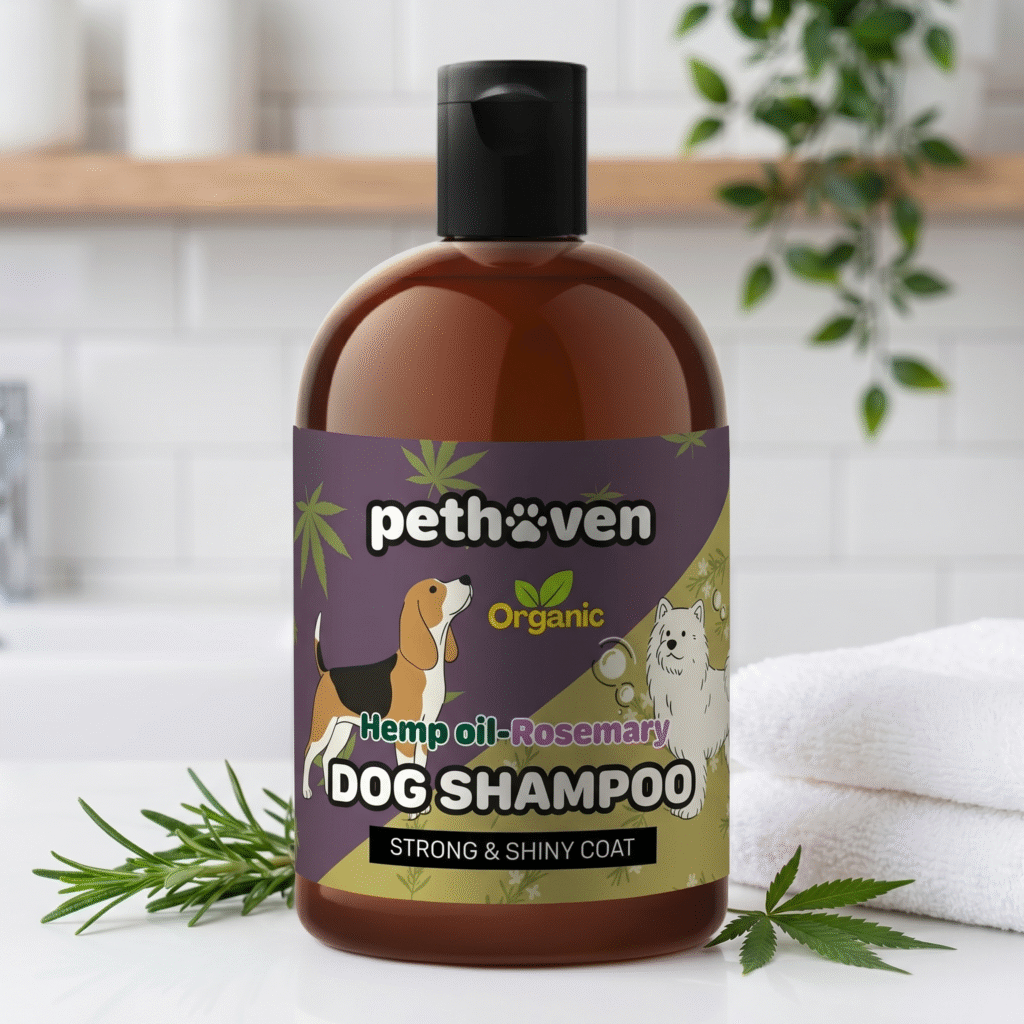 Hemp-Rosemary Shampoo" title="Why Your Dog's Coat Looks Dull — And How to Fix It in 30 Days">
Common questions
Can a coat be permanently damaged?
Generally no — the coat grows continuously, so older damaged hair is replaced over time. The skin and follicles can be damaged longer-term by repeated harsh shampoo use, but even that mostly recovers with months of better care.
Does coconut oil help with a dull coat if I rub it on directly?
Topically, a small amount can add temporary shine, but it doesn’t fix the underlying cause and can attract dirt. Better to address the cause: shampoo, diet, brushing, schedule.
What about coat supplements at the pet store?
Most are overpriced fish oil. Plain fish oil from a pharmacy at proper dosage works just as well for far less money. Check that any supplement is third-party tested for purity.
My dog’s coat is dull only on the back. Why?
The back gets the least owner attention during brushing and the most environmental exposure (sun, dust). It’s also where seborrhea typically shows first. Brush the back specifically and watch for flaking or oiliness.