
Half the dog shampoos sold for “itchy skin” contain ingredients that, in a controlled study, would aggravate itching. The marketing on the bottle says “soothing” and “gentle.” The ingredient list tells a different story.
If your dog has been scratching, this guide cuts through the confusion. We’ll go through what’s actually causing the itch, what to look for in a shampoo that will help, what to avoid, and the warning signs that mean shampoo alone won’t fix the problem.
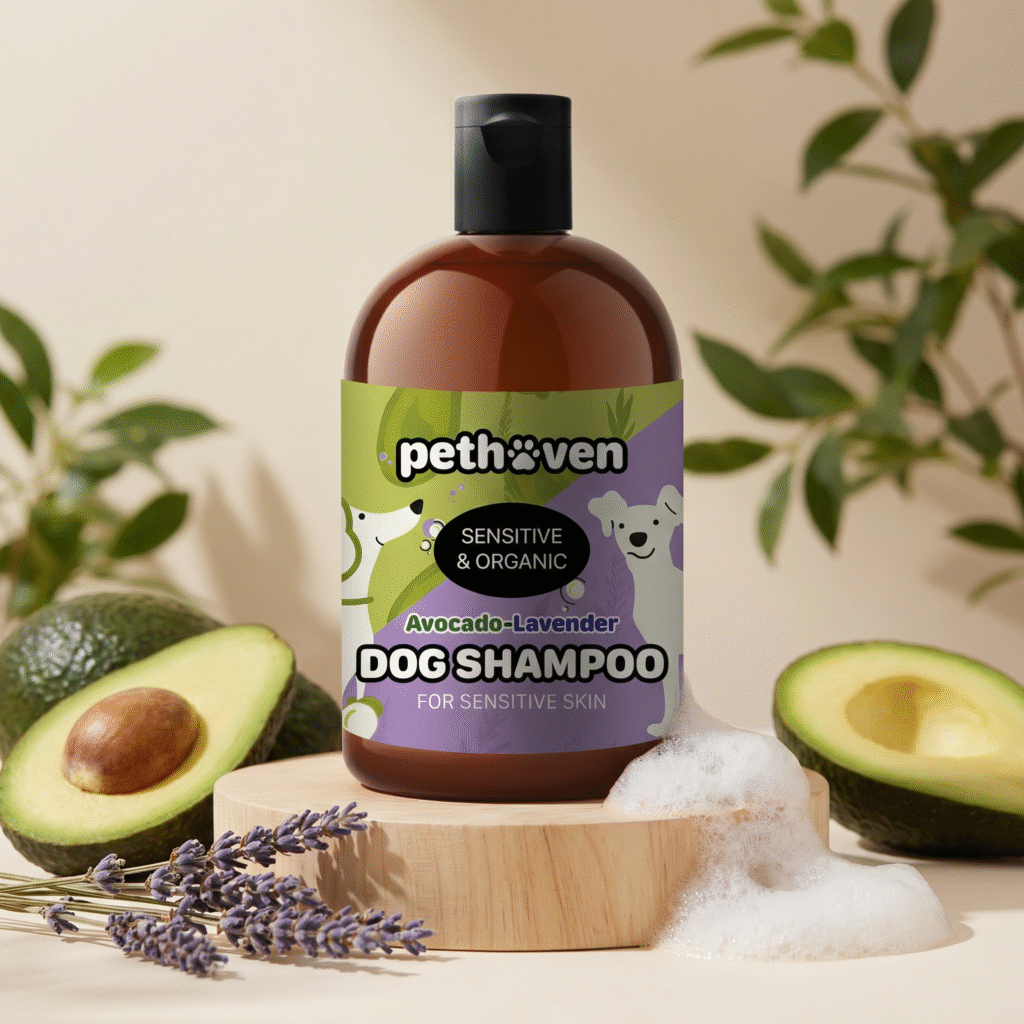
The best shampoo for itchy skin is mild, plant-based, sulfate-free, and contains soothing ingredients like oatmeal, aloe, lavender, or avocado oil. Avoid anything with sodium lauryl sulfate, artificial fragrance, or synthetic dyes. If itching continues after two correct washes spaced a week apart, see a vet — it may not be a shampoo problem.
The four real causes of dog itch
Owners often jump to “allergies” when their dog starts scratching. That’s correct sometimes, but only about a third of the time. The other causes are easier to fix and require completely different treatments.
Dry skin from harsh shampoo
The most common cause, especially in apartment dogs that get bathed often. A shampoo with strong cleansers strips the skin’s natural oil layer. Without that layer, the skin loses moisture, the nerve endings get irritated, and the dog scratches. The cure isn’t more bathing with a “soothing” shampoo — it’s switching to a milder shampoo and stretching the gap.
Contact or food allergies
Real allergies usually present alongside other signs: ear infections, paw licking, hot spots, recurring skin infections. If your dog has only mild generalized itching without these other signs, allergies probably aren’t it. If they do have these signs, you need a vet — no shampoo will fix a true allergy.
Parasites
Fleas, mites, lice. Itching from parasites is usually intense, concentrated on specific areas (rump, ears, belly), and often visible if you part the fur. Flea dirt looks like black pepper at the base of the coat. Mites you usually can’t see but a vet can scrape and identify. No shampoo treats parasites — you need a real parasiticide.
Bacterial or yeast infection
Often the smell gives it away — a corn-chip or cheesy odor on the skin. Hot spots, redness in skin folds, recurring ear infections. These are vet visits, usually treated with antibiotics or medicated shampoos prescribed for the specific organism.
What to look for in a shampoo for itchy skin
Once you’ve confirmed it’s not a vet problem, the right shampoo can make a real difference within two or three washes. Look for these specific ingredients.
How to wash an itchy dog correctly
The shampoo matters, but how you use it matters almost as much.
Wet mats are nearly impossible to remove. Brushing dry also distributes natural oils and lets you check for hot spots before water makes them worse.
Hot water strips oils even from a mild shampoo. Lukewarm (slightly cooler than what feels neutral on your wrist) is what dogs prefer and what’s gentlest on irritated skin.
Spend two full minutes saturating the coat. Shampoo applied to a dry or partially-wet coat doesn’t lather properly and tends to be applied in concentrated spots, which is rough on skin.
This is where most owners cut corners. Soothing ingredients like oatmeal need actual contact time to work. A 30-second lather and rinse is mostly just removing surface dirt.
Residual shampoo on the skin is itself an irritant — sometimes the cause of itching that owners blame on the shampoo’s ingredients. Rinse until the water runs completely clear, then keep going another minute.
Aggressive towel rubbing irritates already-itchy skin. Press water out with a towel, then let the coat air-dry, or use a cool blow-dryer if your dog tolerates it.
Wash with shampoo once. Rinse fully. Then wash again with a much smaller amount of shampoo, and rinse fully again. The second pass cleans the dog much more thoroughly, and the dilute second application is even gentler on skin than a single concentrated wash.
When shampoo isn’t enough
Two correct washes spaced a week apart with a properly formulated shampoo should produce visible improvement in dry-skin or mild-irritation itching. If you don’t see improvement, or if any of the following are present, see a vet:
Open sores or hot spots. Bald patches. Strong odor from the skin or ears. Constant licking of paws to the point of staining. Itching focused intensely on one area. Itching that wakes the dog up at night. Any of these point to causes a shampoo can’t fix.
The plan in three steps
If your dog has itchy skin and you’re not sure if it’s a shampoo issue or something more:
Week 1: Switch to a mild plant-based shampoo. Bathe correctly (see above). Wait the full week.
Week 2: Bathe a second time. Same protocol. Watch the next 7 days.
Week 3: If itching has improved, you’ve solved the problem — keep the new shampoo and a 2-3 week schedule. If itching is the same or worse, it’s not a shampoo problem. See a vet for a real diagnosis.
 Avocado-Lavender Shampoo" title="Best Dog Shampoo for Itchy Skin: What Actually Works (and What Doesn't)">
Common questions
How long should I try a new shampoo before deciding it works?
Two correct washes spaced a week apart. If you don’t see improvement in itching by the third week, it’s not the shampoo and you should see a vet rather than keep changing products.
Can I use human “sensitive skin” shampoo on my dog?
No. Dog skin has a different pH than human skin (more neutral, closer to 7 vs. human skin’s 5.5). Human shampoos are too acidic and will damage the dog’s skin barrier even if labeled “gentle.”
What about medicated shampoos from the vet?
Use those exactly as your vet prescribes — usually 2-3 times a week for the first couple of weeks. They target specific causes (yeast, bacteria, severe allergic reaction). They’re not appropriate for general use because they’re stronger than a maintenance shampoo needs to be.
Do oatmeal shampoos actually work?
Colloidal oatmeal is one of the few shampoo ingredients with solid clinical evidence behind it for reducing itch. Just check the label — many “oatmeal” shampoos contain only trace amounts to justify the marketing, with the bulk of the formula still being sulfates.