
“Sensitive skin” is one of those phrases that gets used so loosely it stops meaning much. Owners use it to describe everything from mild dryness to chronic allergic conditions, and shampoo brands slap it on every label. The reality is that sensitive skin in dogs is a specific pattern of symptoms — and recognizing which symptoms your dog actually has tells you what to do about it.
This guide walks through seven concrete signs that point to genuine skin sensitivity, what each one usually means, and the right response.
One sign by itself is often nothing. Three or more clustered together usually means real skin sensitivity that won’t fix itself. The right response depends on which signs — some are shampoo problems, some are diet, some are environmental, and some need a vet.
Sign 1: Itching without obvious cause
The most common sign and the easiest to write off. Your dog scratches more than usual, but you don’t see fleas, the skin doesn’t look red, and there’s no obvious change in their environment.
What it usually means: dry skin from over-bathing or harsh shampoo (most common), seasonal environmental allergies (next most common), or food sensitivity (less common but real).
What to do: try a milder shampoo for two washes spaced a week apart. If itching reduces, the shampoo was the problem. If not, log when the itching is worst (after meals? After walks? At a specific time of year?) — those patterns help your vet diagnose.
Sign 2: Red patches or hot spots
Round, weepy, painful-looking areas of inflamed skin, often hidden under the coat. The dog usually licks or chews the spot, which makes it worse.
What it usually means: bacterial infection in already-irritated skin. The original irritation might have been a flea bite, a scrape, or just a damp spot in the coat — but once bacteria settles in, the spot grows fast.
What to do: this is a vet visit, not a shampoo issue. Hot spots typically need topical or oral antibiotics. While you’re waiting for the vet, clip the hair around the spot to expose it to air and keep the dog from licking it.
Water can spread bacteria into the surrounding skin and the warmth can promote growth. Wait until the vet has treated the hot spot before resuming baths.
Sign 3: Flaky or dry skin
Visible flakes when you part the coat, especially along the back and around the tail. Often looks like dandruff. The skin may appear chalky-white in patches.
What it usually means: dehydration of the skin barrier. Most often caused by over-bathing with a harsh shampoo, but can also be caused by low humidity (winter heating), dietary fat deficiency, or — in older dogs — thyroid issues.
What to do: switch to a moisturizing plant-based shampoo with avocado, hemp seed oil, or aloe. Stretch the gap between baths to at least 3-4 weeks. Add a tablespoon of fish oil or coconut oil to your dog’s food daily (check with your vet for dosage based on weight). If flaking persists after a month of this approach, see a vet to rule out thyroid.
Sign 4: Bad reaction to a new shampoo
You switched products and within 24-48 hours your dog is itching, the skin looks irritated, or hot spots appear. This is one of the few signs where you can identify the cause with certainty.
What it usually means: contact reaction to one or more ingredients in the new product. Most common culprits: artificial fragrance, synthetic dyes, sulfates, or preservatives like methylisothiazolinone.
What to do: bathe immediately with a mild plant-based shampoo to wash off the offending product. Don’t use the new product again. If the reaction is severe (swelling, open sores, intense scratching), see a vet — they may prescribe a short course of anti-inflammatory medication.
Before bathing your whole dog with a new shampoo, apply a small amount to a small patch of skin (inside thigh works well), leave for two minutes, rinse, and wait 24 hours. If no reaction, the shampoo is probably fine. If redness or itching at the patch, the shampoo isn’t right for your dog.
Sign 5: Excessive licking of paws
Your dog licks their front paws — often the tops, sometimes between the toes — to the point of staining the fur reddish-brown. The licking happens at rest, not just after walks.
What it usually means: contact allergy or environmental allergy. Paws are constantly exposed to whatever the dog walks on — grass, treated lawns, salted sidewalks, cleaning products on floors — and dogs with sensitive skin often react there first.
What to do: wipe the paws with a damp cloth after every walk (just water, no soap). This removes 80% of contact allergens. If licking persists, see a vet to rule out yeast infection in the paw pads, which is treated with antifungals.
Sign 6: Recurring ear infections
The same ear keeps getting infected. Or both ears keep getting infected. You go to the vet, get drops, it clears up, and within a few months you’re back.
What it usually means: underlying allergies, almost always. Recurring ear infections are one of the strongest signs of true allergic disease in dogs. They’re rarely caused by shampoo getting in the ear (despite the common assumption).
What to do: this is a vet conversation, and a real one. Your vet may suggest allergy testing or an elimination diet trial. In the meantime, switching to a mild shampoo and being scrupulous about drying the ears after baths can reduce flare frequency.
Sign 7: Dull coat despite a good diet
Your dog eats well, is otherwise healthy, but the coat looks lifeless — no shine, brittle texture, maybe more shedding than expected.
What it usually means: skin barrier dysfunction, which is the underlying mechanism behind most “sensitive skin.” The coat shows the result first because it’s the visible part of the system that’s struggling.
What to do: review the shampoo (is it stripping the coat?), the bath frequency (is it too often?), and the diet (is fat intake adequate?). A dull coat from skin barrier issues usually responds visibly within 4-6 weeks of switching to a milder shampoo and adding omega oils to the diet.
The “shampoo first, vet next” rule
For most cases of sensitive skin signs, here’s the order of operations:
- Switch to a mild plant-based shampoo. Sulfate-free, dye-free, fragrance-free. Bathe correctly (lukewarm water, full rinse, gentle drying).
- Wait two weeks. Don’t make any other changes during this period.
- Reassess. If signs are improving, continue with the new shampoo and a 3-4 week bath schedule. If signs are stable or worse, see a vet.
This protocol catches the 60-70% of cases that are truly shampoo-related without delaying real medical care for the 30-40% that aren’t.
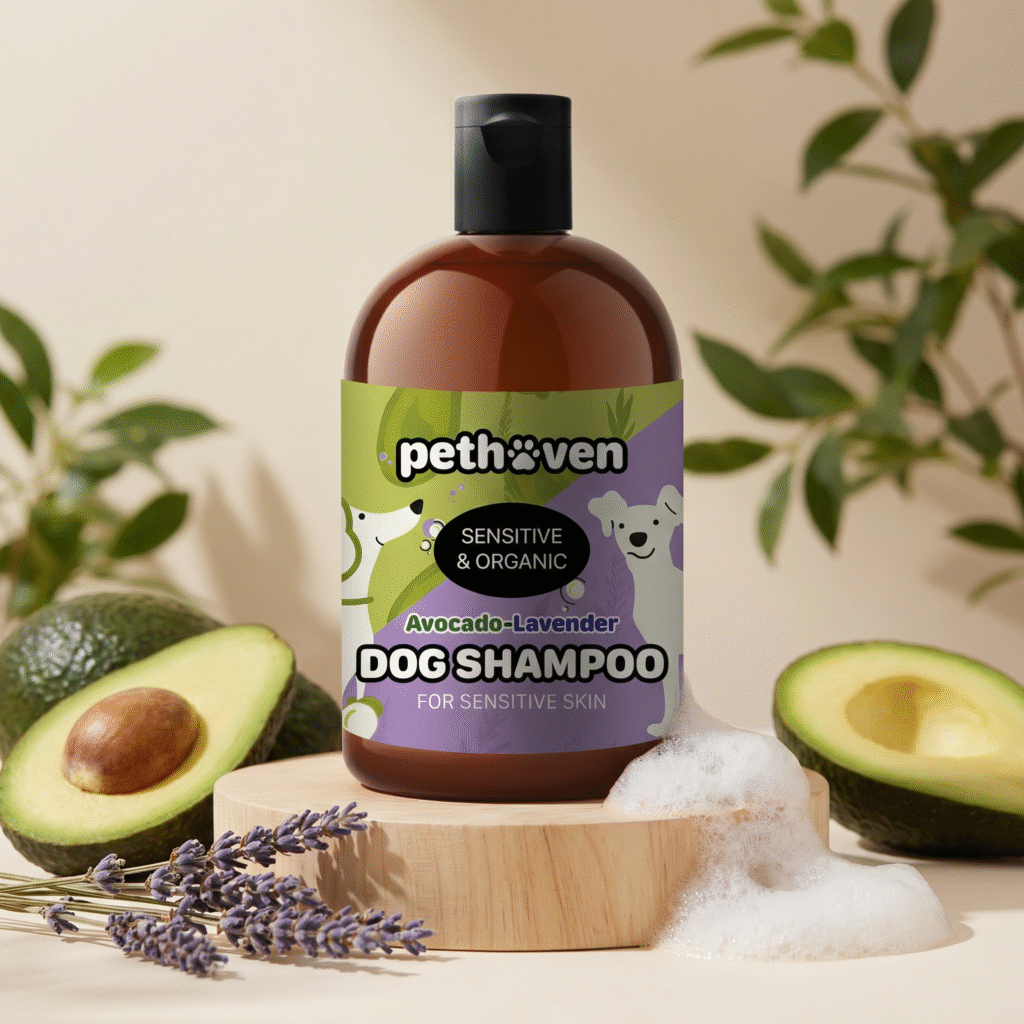 Avocado-Lavender Shampoo" title="7 Signs Your Dog Has Sensitive Skin (And What to Do About Each One)">
Common questions
Can sensitive skin develop later in life?
Yes. Dogs that were fine with the same shampoo for years can develop reactions as they age, often because the skin barrier weakens. Don’t assume “they’ve used it forever” means it’s still right for them.
Is sensitive skin breed-related?
Partly. Some breeds (Frenchies, English Bulldogs, Bull Terriers, Westies, Goldens) have higher rates of skin issues. But environmental factors and product choices matter more than breed in most cases.
Should I add omega oils to my dog’s food?
For dogs with skin issues, yes — fish oil or a quality omega-3 supplement helps the skin barrier rebuild. Talk to your vet for dosage based on your dog’s weight. Don’t just dump in unlimited oil; too much fat can cause GI problems.
Is dandruff in dogs the same as in humans?
Mechanically yes — flaking from a disrupted skin barrier. But the causes are different. Dog dandruff is usually from over-bathing, dehydration, or diet issues, not the yeast that causes most human dandruff.