
Two dogs the same size, same age, same breed family can need completely different bath products and schedules. The reason isn’t their personality or environment — it’s their coat type. A Frenchie’s single coat and a Husky’s double coat are doing fundamentally different jobs on the dog’s body, and treating them the same is what creates most of the skin and coat problems first-time owners run into.
This guide walks through the five coat types you’ll actually encounter, what each one needs at bath time, and the shampoo profile that works best for each.
Single-coat dogs need bathing more often and gentler conditioning. Double-coat dogs need less bathing and more brushing. Long-coat dogs need detangling-friendly formulas. Wire-coat dogs need bathing the least and should avoid heavily conditioning shampoos. Curly-coat dogs benefit from richly moisturizing formulas combined with regular grooming.
Single-coat breeds
One layer of hair, usually short to medium length. The hair lies flat against the body. There’s no soft undercoat. Common single-coat breeds include Boxers, Greyhounds, Dobermans, Boston Terriers, French Bulldogs, Whippets, Italian Greyhounds, Dachshunds, and most pit bull–type breeds.
What single coats do for the dog
Not much insulation. Single-coat dogs run cold in winter (which is why you’ll see them in coats) and overheat more easily than they look like they should. Their skin is also closer to the surface and gets more sun exposure, which is why pink-skinned single-coat dogs can sunburn.
Bath approach
Single coats dry fast, take shampoo evenly, and rinse cleanly. The catch is that they show oil and dirt visibly and quickly, so owners tend to over-bathe. A typical schedule is every 3–6 weeks for adult dogs.
Shampoo should be mild and conditioning. The skin gets dry without the protection of an undercoat trapping oils, so a formula with avocado oil, aloe, or oatmeal works well. Sulfate-free is more important here than it sounds — these dogs feel a harsh shampoo within one wash.
Double-coat breeds
Two distinct layers: a soft, dense undercoat for insulation, and a longer outer “guard” coat that repels water and dirt. Common double-coat breeds include Huskies, Malamutes, German Shepherds, Golden Retrievers, Labrador Retrievers, Australian Shepherds, Bernese Mountain Dogs, Newfoundlands, and Border Collies.
What double coats do for the dog
A lot. The undercoat traps body heat in winter and creates an insulating air layer that, surprisingly, keeps these dogs cool in summer too (which is why you should never shave a double-coated dog — it actively makes them hotter). The outer coat is naturally water-resistant and self-cleaning to a point, which is why a healthy Husky can play in mud and look fine an hour later.
Bath approach
Double coats need less bathing than most owners realize — typically every 6–8 weeks. The undercoat traps moisture; if you wash too often, you damage the coat’s natural water-repelling properties and you’ll see persistent damp-dog smell that doesn’t go away.
The shampoo should rinse completely and cleanly — a thick, lingering shampoo gets trapped in the undercoat and causes itching that owners often misattribute to allergies. Look for a coconut-derived surfactant formula that’s a bit thinner in consistency. Avoid heavy conditioners — they coat the guard hairs and reduce water-resistance over time.
For double coats, brushing accomplishes 70% of what bathing does — it removes loose undercoat, distributes natural oils, and prevents matting. A 5-minute weekly brush will let you stretch baths to every 8 weeks comfortably.
Long-coat breeds
One coat, but long. Includes Afghan Hounds, Maltese, Shih Tzus, Yorkies, Lhasa Apsos, Cavaliers, Cockers (some lines), and most doodles.
What long coats do for the dog
Long coats don’t have the insulating function of double coats — they’re mostly cosmetic in their current breed form. They trap debris (leaves, sticks, sand) easily and tangle into mats if not maintained. Mats aren’t just ugly — they pull at the skin, trap moisture, and lead to hot spots and skin infections.
Bath approach
Long coats need bathing every 2–3 weeks, with brushing in between. The bath itself is fine; the matting problem is what makes long coats higher-maintenance.
Shampoo should be smoothing and detangling. Coconut oil-based formulas with light conditioning work well. Brush thoroughly before the bath — wet mats are nearly impossible to remove without cutting them out.
If your long-coat dog has tangles, brush them out before the bath. Water makes mats tighten and lock together. A wet matted long-coat dog often ends up needing a vet or groomer to shave out the mats, which is uncomfortable and expensive.
Wire-coat breeds
Coarse, bristly outer hair with a softer undercoat. Includes most Terriers (Wire Fox, Schnauzer, Border Terrier, Airedale), and Wirehaired Pointers and Vizslas.
What wire coats do for the dog
Wire coats are nature’s outdoor-work coat. They repel dirt, resist water, and protect the skin from underbrush. They’re the coat type designed for dogs that go into rough terrain after game.
Bath approach
Wire coats need bathing the least — every 4–8 weeks is typical, and many owners go longer. Over-bathing softens the wire texture and turns it into floppy regular hair, which permanently changes the dog’s appearance (a real concern for show dogs, but also affects the coat’s protective function for active dogs).
Avoid heavy conditioners. A clean-rinsing mild shampoo without extra moisturizing oils preserves the coat texture. For show dogs, hand-stripping (a grooming technique) is used to maintain the coat without bathing at all.
Curly-coat breeds
Tight curls instead of straight hair, often non-shedding. Includes Poodles (all sizes), Bichon Frise, Portuguese Water Dogs, Irish Water Spaniels, Kerry Blue Terriers, and doodles with strong Poodle expression.
What curly coats do for the dog
Curly coats trap dander and dirt against the skin rather than shedding it. This is why “non-shedding” doesn’t mean “low-maintenance” — the coat needs frequent grooming to prevent skin issues that build up under the curls.
Bath approach
Curly coats benefit from bathing every 2–4 weeks, often coordinated with the dog’s grooming schedule. The skin under a curly coat is more prone to yeast and bacterial buildup because the curls don’t let air through well, so cleaning the skin (not just the hair) is important.
Shampoo should be richly moisturizing — curly coats dry out faster than straight coats because of the higher surface area exposed. Hemp seed oil and similar plant oils help maintain coat softness and skin moisture. Rinse very thoroughly; residue in tight curls causes a lot of itching.
Mixed-breed coats
Most rescue dogs and mixed breeds have coats that don’t fit neatly into one category. Some general guidance:
The product map by coat type
At Pethoven we have three shampoo formulas designed for different coat needs, plus a paw wax that applies to all of them. Here’s the rough mapping:
- Single coats: Avocado-Lavender (mild, conditioning, good for frequent bathing)
- Double coats: Coconut-Peppermint (rinses cleanly, doesn’t weigh down guard hairs)
- Long coats: Coconut-Peppermint (detangles, conditions without coating)
- Wire coats: Coconut-Peppermint (lightweight, doesn’t soften coat texture)
- Curly coats: Hemp-Rosemary (richly moisturizing, prevents the dryness curly coats develop)
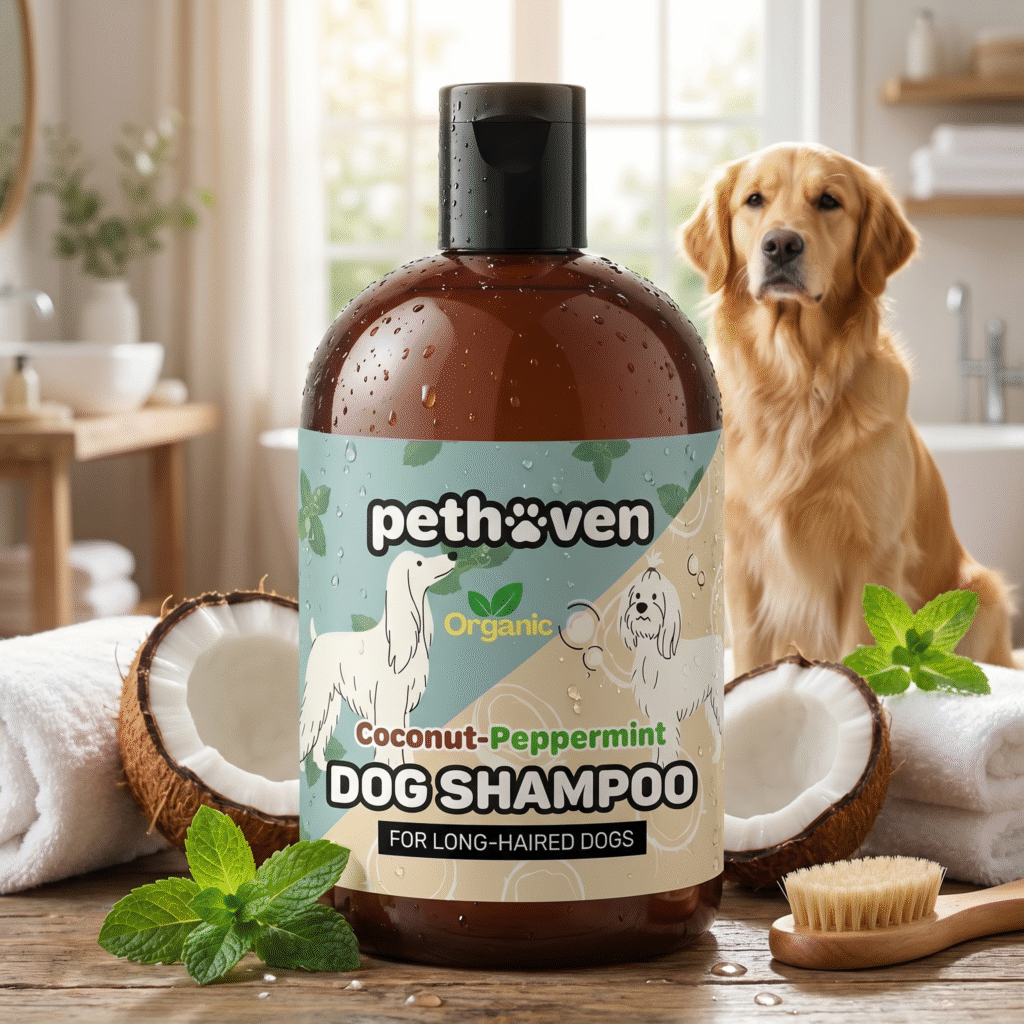 Coconut-Peppermint Shampoo" title="Dog Coat Types Explained: What Single, Double, and Long Coats Mean for Bath Day">
Common questions
How do I know what coat type my mixed-breed dog has?
Look at how the coat behaves: does it lie flat (single), feel fluffy with a soft layer (double), get long and tangly (long), feel coarse (wire), or have visible curls (curly)? Most mixes lean clearly toward one of those five types.
Should I ever shave my double-coated dog in summer?
No. Counterintuitive but true: the double coat keeps dogs cool by trapping an insulating air layer that blocks heat. Shaving removes that and exposes skin to sunburn while making the dog hotter, not cooler. Brush more often instead.
Why is my dog’s coat looking different than it used to?
If it’s gradual, normal aging or seasonal change. If it’s sudden and accompanied by skin issues, see a vet — thyroid issues, Cushing’s disease, and nutritional deficiencies all show up first in coat appearance.
Can a single coat ever shed less than a double coat?
No — but it can produce less visible shed because the hairs are shorter and don’t drift around. Double coats shed undercoat twice a year in big quantities; single coats shed continuously in small amounts.