
A dog’s paw pads are tougher than most people think. They have a thick layer of keratinized skin built for traction and abrasion. But they aren’t bulletproof — and there are specific situations where they get damaged in ways that hurt your dog and take weeks to heal.
This is what paw wax is actually for, when you need it, and what to look for in a good one.
When paw protection actually matters
There are four scenarios where bare paws genuinely get hurt:
1. Hot summer pavement. Asphalt above 125°F (52°C) can burn paw pads in under 60 seconds. Rule of thumb: if you can’t keep the back of your hand pressed to the pavement for seven seconds, your dog shouldn’t walk on it.
2. Winter ice and road salt. Rock salt (sodium chloride) and calcium chloride are caustic — they dry out paw pads, cause cracking, and burn between the toes. Snow itself isn’t harmful, but the salt mix that follows snowstorms is.
3. Rough or rocky terrain. Hiking on rocky trails, beach walks with broken shells, abrasive surfaces during yard work. These cause small abrasions that turn into infections if left unprotected.
4. Persistent dryness. Some dogs simply have drier paw pads year-round. Without help, these dogs develop cracks that hurt to walk on.
For dogs that spend most of their time on grass or carpet, paw wax is unnecessary. For dogs that walk on city streets in extreme weather, it makes a meaningful difference.
How paw wax works
A good paw wax creates a thin, breathable barrier between the paw pad and whatever the dog is walking on. It does two things at once:
- Insulation — slows heat transfer from hot pavement and cold ice
- Sealing — prevents salt, sand, and chemicals from contacting the pad directly
A paw wax is not a “moisturizer” in the cosmetic sense. It’s a protective layer that also happens to keep the pad hydrated.
What to look for in a good paw wax
Read the ingredient list. A useful paw wax should contain:
- Shea butter or cocoa butter — solid at room temp, melts at body heat, forms the barrier layer
- Beeswax — the structural ingredient that holds the wax together and helps it grip the paw
- A carrier oil like coconut, sweet almond, or jojoba — softens the wax and delivers moisture
- Vitamin E — natural antioxidant that prevents the oils from going rancid
- Optionally: a mild essential oil for scent
Avoid waxes with petroleum, parabens, or artificial fragrance. The wax should be safe if your dog licks it (they all will).
What’s in ours
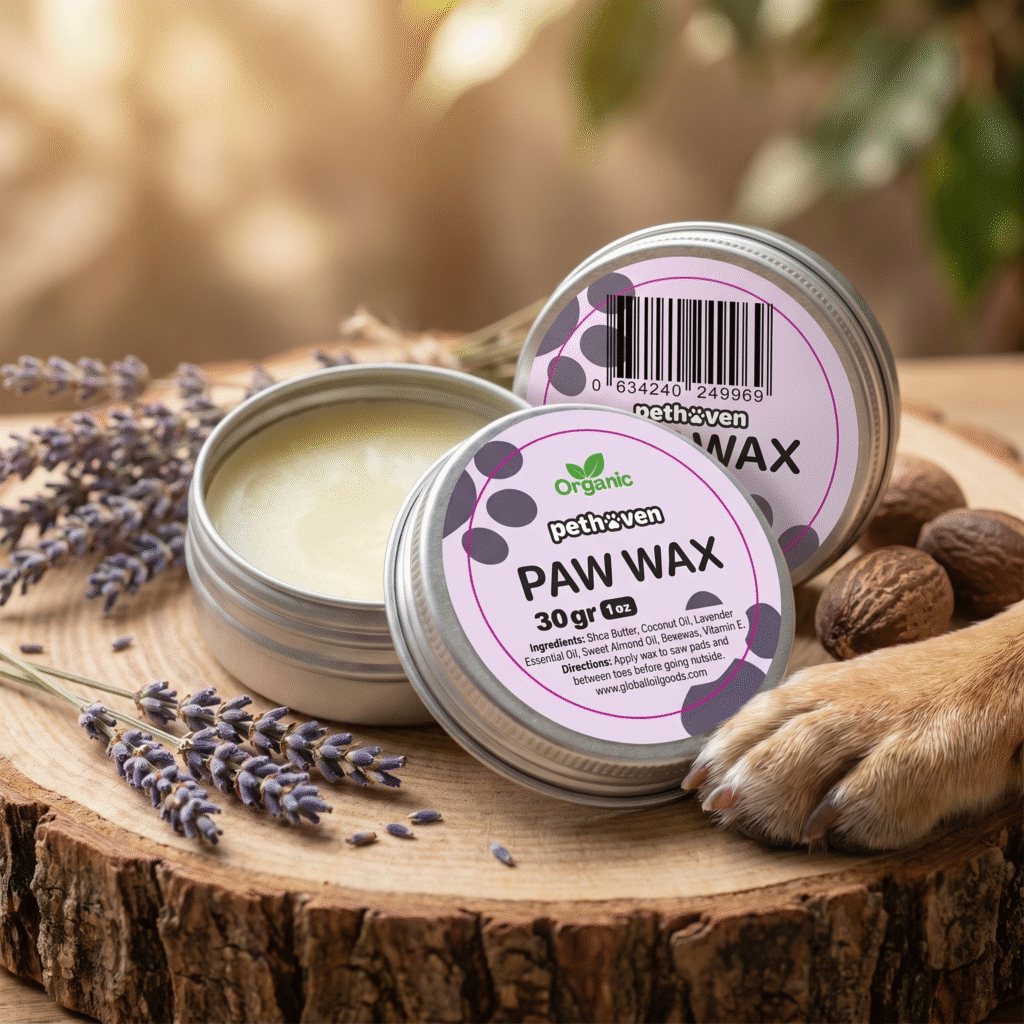
Our Paw Wax uses six ingredients, printed on the tin: shea butter, coconut oil, lavender essential oil, sweet almond oil, beeswax, vitamin E.
That’s it. No mystery ingredients, no fillers, no chemical preservatives. The combination of shea butter (barrier) + beeswax (structure) + coconut and sweet almond oils (penetration and softening) gives you a wax that goes on smoothly, doesn’t track on floors, and is safe if licked.
How to apply
Before walks: rub a pea-sized amount into each paw pad, working it into the pad itself and between the toes. The wax warms with your fingers and applies smoothly.
After winter walks: rinse the paws with lukewarm water to remove salt, then apply a fresh layer.
For daily walks in extreme weather: apply morning and evening.
For occasional protection: apply ten minutes before going outside.
How long a tin lasts
For a medium dog walked twice daily in winter or summer heat, a 30g tin lasts about six weeks. For occasional use, much longer.
The wax does not go rancid in a closed tin (the vitamin E sees to that), but for best quality use within twelve months of opening.
Hand-mixed in small batches in Tartu, Estonia. Currently shipping to the Northeast US. $5 per 30g tin.